Wellbeing concern

Pelvic Floor & Incontinence

Pelvic floor weakness affects continence, comfort and intimate wellbeing. Non-invasive clinical treatment can strengthen the musculature and restore function without surgery.
Understanding the cause

What's happening in your skin

01

Muscles most people never isolate

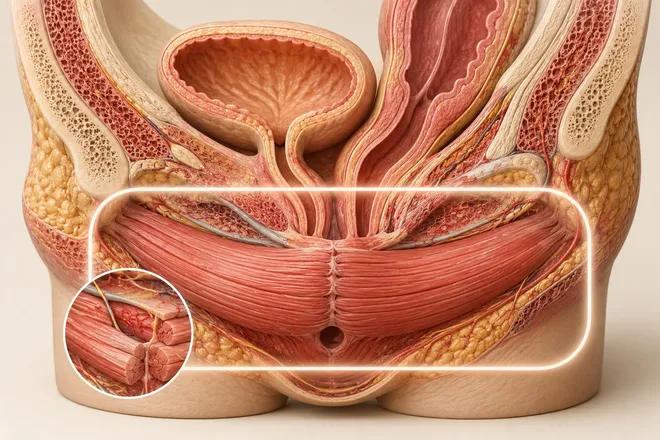
The pelvic floor supports the bladder, bowel and uterus. Most people were never taught to exercise it correctly, and cannot reliably locate it by sensation.

The pelvic floor spans the base of the pelvis and is not easy to locate by sensation. When these muscles weaken through childbirth, menopause or ageing, the consequences range from stress urinary incontinence to urgency incontinence, pelvic discomfort and reduced intimate sensation. None of this is inevitable.

02

Why Kegels often underdeliver

Most people cannot reliably isolate the correct muscle group without guidance. Contracting the wrong muscles produces no clinical benefit regardless of effort.

Pelvic floor exercises are clinically validated when performed correctly. Most people cannot isolate the right muscles without guidance, and inconsistent contraction produces little benefit. Sustaining the repetition volume needed for structural improvement is also difficult. Many people give up before seeing change, not because exercise does not work, but because accuracy without feedback is harder than it sounds.

03

Technology doing the work for you

One Emsella session induces thousands of supramaximal contractions at an intensity voluntary effort cannot match. Clinical trials report significant improvement in incontinence scores after a six-session course.

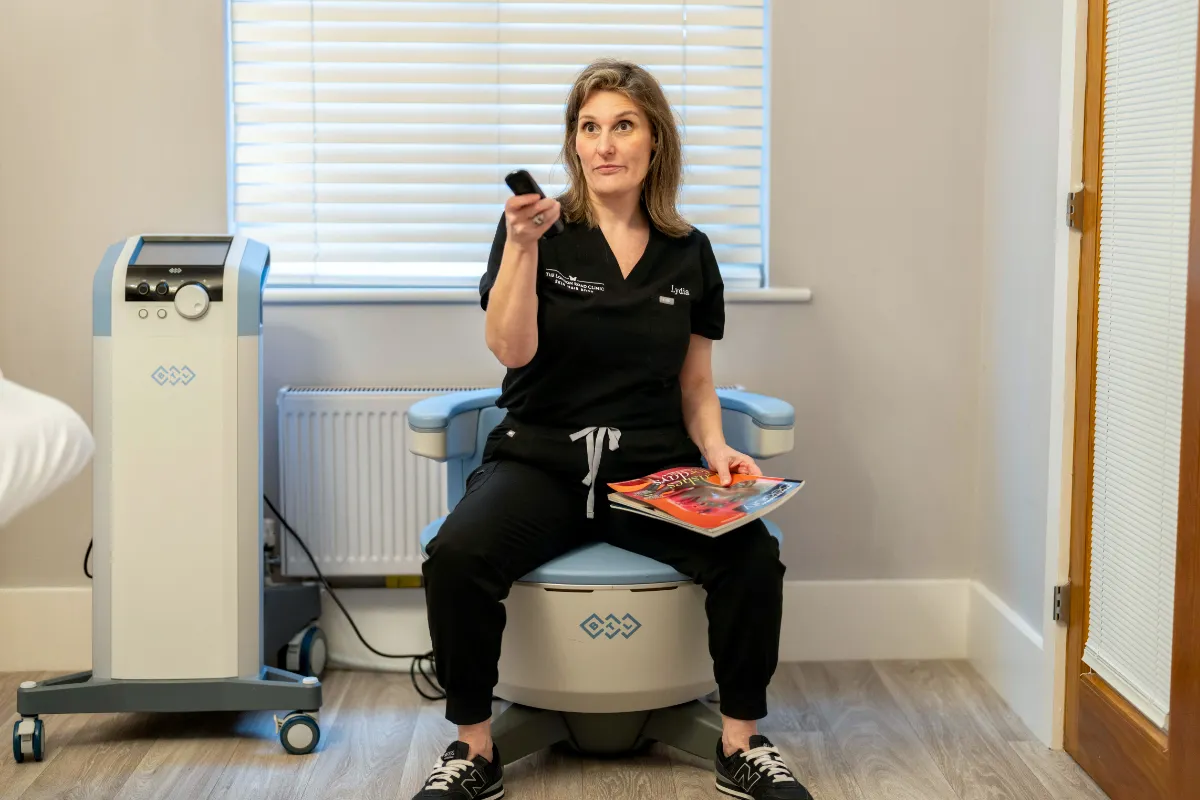
The Emsella chair uses high-intensity focused electromagnetic technology to induce supramaximal pelvic floor contractions without effort, preparation or undressing. The full muscle complex is activated and strengthened throughout each session. Most clients notice change from around the third session, with results continuing to develop as neuromuscular strength builds.
Recommended treatments

What we use for pelvic floor & incontinence

Clinical perspective

Pelvic floor concerns are one of the most undertreated conditions we see in clinic, and also one of the most impactful to address. People often accept leakage and pelvic discomfort as inevitable after childbirth or menopause, because the conversation feels awkward or the solutions seem limited. The treatment we offer is entirely non-invasive and the results are clinically significant. The majority of our clients report a meaningful reduction in symptoms after a standard course, often sooner than they expected.

Don't accept it as normal Non-invasive and effective Clinically significant results
Lydia Griffin, Clinic Director, The London Road Clinic

In their own words

I found it respectful and discreet and Laura made me feel comfortable and reassured.
Susan · with Laura

Verified Fresha review. Displayed as submitted. Read all 1,400+ reviews →

Common questions

Frequently asked about pelvic floor & incontinence

What is stress urinary incontinence?
Stress urinary incontinence is the involuntary leakage of urine triggered by increased intra-abdominal pressure, coughing, sneezing, laughing, jumping or lifting. It is caused by weakness in the pelvic floor muscles and urethral sphincter, rather than a problem with the bladder itself. It is very common, affecting up to one in three women at some point, and is highly responsive to pelvic floor strengthening treatment.
How many sessions are required?
A standard course consists of six sessions delivered twice weekly over three weeks. Most clients report improvement from around the third session, with the most significant results becoming apparent two to four weeks after completing the course as neuromuscular strength continues to develop. Maintenance sessions are typically recommended every six to twelve months.
Is this treatment suitable for men?
Yes. Pelvic floor dysfunction in men, commonly following prostate surgery, or related to pelvic pain and lower urinary tract symptoms, responds to the same strengthening approach. A clinical consultation determines suitability and sets realistic expectations.
Do I need to undress for the treatment?
No. The treatment is delivered through fully clothed seating on the treatment chair. The electromagnetic energy passes through clothing to stimulate the pelvic floor musculature directly. Sessions are thirty minutes and require no preparation or recovery time.
When should I see a GP or specialist instead?
This treatment is appropriate for functional pelvic floor weakness, stress incontinence and mixed incontinence with a significant stress component. Urge incontinence without a stress component, haematuria (blood in urine), pelvic organ prolapse, or incontinence following recent surgery should be assessed by a GP or urology/gynaecology specialist before any clinic treatment is considered. Your clinician will advise and refer where appropriate.

Ready to take the next step?

Book a consultation

Your clinician will assess your skin, review your history and design a treatment plan matched to your specific presentation, not a generic protocol.

Medically reviewed by Dr Shahe Boghossian, Medical Consultant, GMC 5204600 . Last reviewed 21 May 2026.

Registered with & recognised by

Book a consultation WhatsApp