Hair concern

Hair Thinning

Hair thinning can stem from genetics, hormonal change, nutritional deficiency or follicle-level inflammation. Clinical assessment determines which mechanism is driving the loss, and which approach is most appropriate.
Understanding the cause

What's happening in your skin

01

Something disrupted your hair cycle

In telogen effluvium, shedding appears weeks or months after the trigger, which is why most people have been losing density longer than they realise.

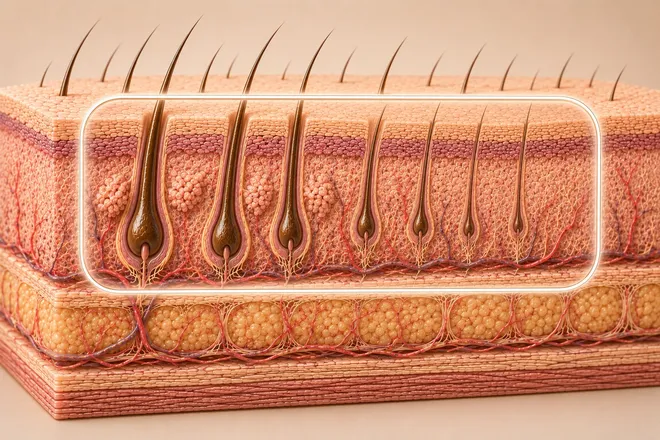
Every follicle cycles through anagen (active growth), catagen (transition) and telogen (rest, then shed). In androgenetic alopecia, DHT miniaturises follicles progressively until they go quiet. In telogen effluvium, an unusually high proportion of follicles enter telogen after a triggering event. Alopecia areata involves immune-mediated follicle damage. Each pattern looks different and responds to different treatment.

02

Act before follicles go quiet

Once a follicle has been dormant long enough, its capacity to respond to treatment diminishes. The window matters.

Clinical treatments work most effectively on follicles that retain biological activity. People often delay because the change is gradual or because supplements promise improvement without delivering it. By the time most clients arrive, they have been losing density longer than they realise. Identifying the cause quickly is the priority.

03

Restoring the follicle environment

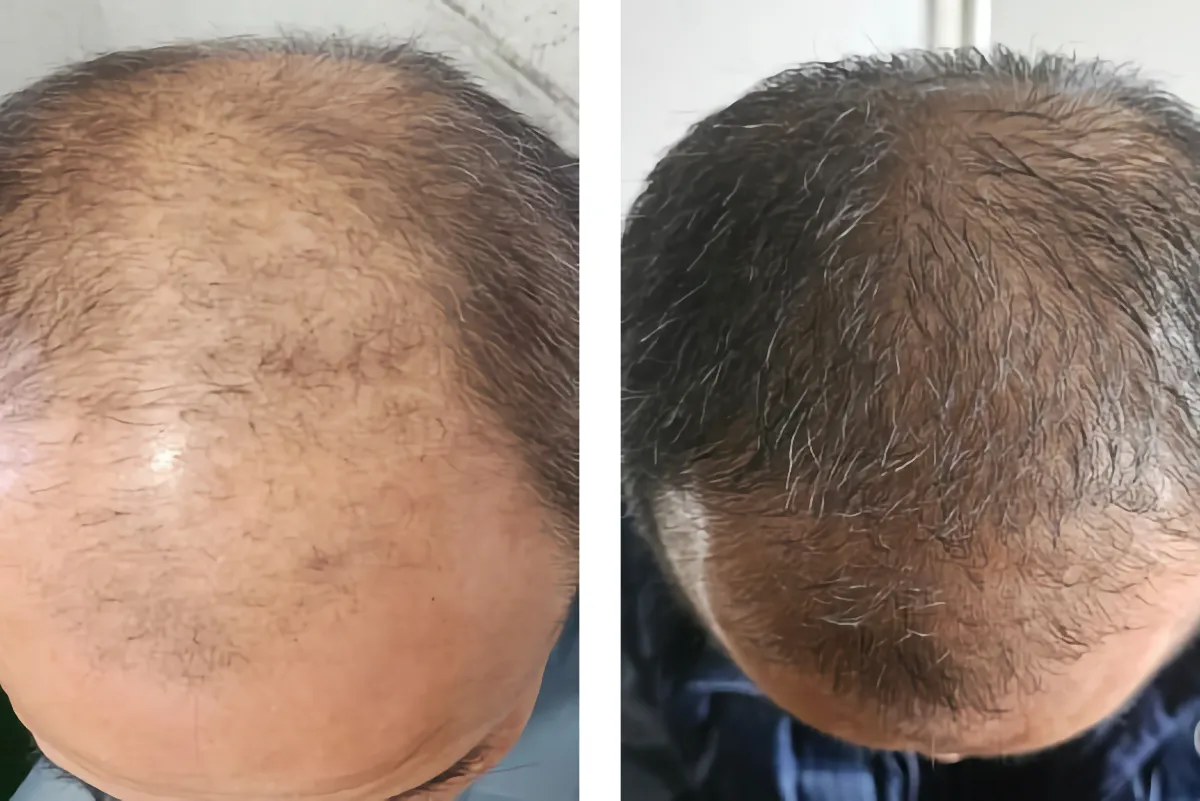
PRP delivers growth factors PDGF, VEGF and IGF-1 directly to the scalp, extending the anagen growth phase in active follicles.

PRP and polynucleotides deliver concentrated growth factors to the scalp, stimulating dormant follicles and extending anagen. Exosome therapy reduces follicular inflammation and improves the scalp microenvironment. Clinical assessment comes first. The treatment pathway is built around what is actually driving the thinning.

Recommended treatments

What we use for hair thinning

Clinical perspective

Hair thinning is a concern that people often delay seeking help for, partly because it comes on gradually, and partly because there is a lot of noise out there about supplements and shampoos that claim to reverse it. By the time most people come to us, they have been losing hair for a while. The good news is that the follicle is rarely completely inactive, and clinical treatments that deliver growth factors directly to the scalp can make a meaningful difference, particularly if the cause is correctly identified first.

Act before follicles go quiet Supplements won't fix this Cause must be identified
Lydia Griffin, Clinic Director, The London Road Clinic

In their own words

Lydia was brilliant today, very knowledgeable, very caring and put me at ease. Would highly recommend and going back for more treatments. Thank you for a great experience.
Debbie · with Lydia Griffin, Clinic Director · Nov 2025

Verified Fresha review. Displayed as submitted. Read all 1,400+ reviews →

Common questions

Frequently asked about hair thinning

How do I know what type of hair loss I have?
A clinical assessment is the starting point. We evaluate the pattern, density and distribution of loss, alongside a review of your health history, hormonal profile and lifestyle. This determines whether the loss is androgenetic, hormonal, stress-related or inflammatory in origin, each requiring a different approach. There is no effective treatment without knowing the cause.
How does PRP work for hair loss?
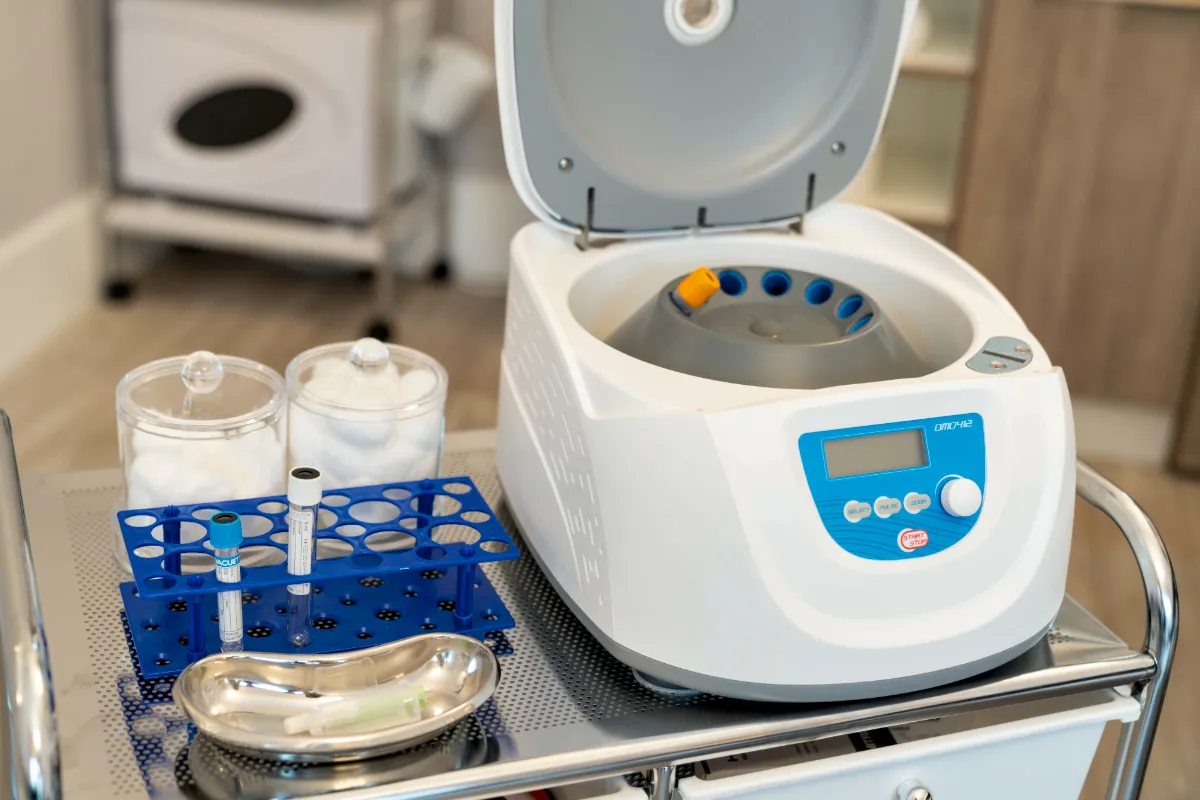
Platelet-rich plasma (PRP) is prepared from a small sample of your own blood, concentrated to increase the platelet count. Platelets release growth factors including PDGF, VEGF and IGF-1 that stimulate follicle activity, increase scalp vascularity and extend the anagen growth phase. The preparation and injection is performed in-clinic and typically requires a course of three to four sessions.
Is hair loss treatment suitable for women?
Yes. Female pattern hair loss and diffuse thinning from hormonal change or stress are among the most common presentations we treat. The assessment and treatment approach differs from male pattern loss in several respects, including the scalp areas typically affected and the relevance of hormonal investigation. A tailored clinical assessment is always the first step.
How long before I see results?
Hair growth cycles mean that results from clinical treatment are typically visible after three to four months, as new anagen growth becomes apparent. A course of treatments over three to six months is usually recommended, with assessment at each stage. Hair loss treatment is gradual and progressive. Managing expectations at the outset is an important part of the consultation.
Can hair loss be prevented from recurring after treatment?
In cases of pattern hair loss, which has an ongoing genetic and hormonal driver, maintenance treatment is typically required to sustain results. In cases of telogen effluvium triggered by a specific event, the hair cycle often normalises once the trigger resolves. Treatment accelerates recovery. Your clinician will advise on whether ongoing management is needed based on the cause identified.

Ready to take the next step?

Book a consultation

Your clinician will assess your skin, review your history and design a treatment plan matched to your specific presentation, not a generic protocol.

Medically reviewed by Dr Shahe Boghossian, Medical Consultant, GMC 5204600 . Last reviewed 21 May 2026.

Registered with & recognised by

Book a consultation WhatsApp