


Revitalis Skin Booster in Newark for Crow’s Feet and Lip Lines: What It Is and How It Works
- Apr 11
- 6 min read
Updated: Apr 12
Reviewed by Dr Shahe Boghossian, GMC-registered aesthetic physician | The London Road Clinic, Newark, Nottinghamshire
Those Lines Around Your Eyes and Mouth. There’s Something New Worth Knowing About.

REVITALIS AT A GLANCE
Revitalis is a CE-marked injectable skin booster from Croma-Pharma, combining non-crosslinked hyaluronic acid (1.8%) and glycerol (2.1%) to deeply hydrate the skin from within. It is not a dermal filler and does not add volume or alter facial structure. It is specifically formulated for the delicate areas around the eyes and mouth, where fine lines form first and are hardest to treat. A standard course is three to four sessions, spaced two to four weeks apart.
The fine lines around your eyes and mouth are usually the first to arrive. They’re also, frankly, the hardest to shift. Crow’s feet that deepen when you smile and linger when you don’t. Small vertical lines above the lip that catch your lipstick. The kind of changes you notice in certain light and then can’t stop noticing.
The reason these areas are so stubborn isn’t a mystery. The skin around the eyes and mouth is thinner, more mobile, and loses moisture faster than almost anywhere else on your face. It’s constantly moving - every smile, every sip of coffee, every conversation. And as we age, the structural ingredients that keep skin plump and resilient decline. The result shows up exactly here, first.
Most treatments aren’t well-designed for these zones. Heavier products carry real risk in such delicate areas. Topical skincare rarely penetrates deeply enough to make a meaningful difference. This is precisely why we’re introducing Revitalis to the treatment menu at The London Road Clinic in Newark - and why, after reviewing the clinical evidence, we’re confident it deserves a place there.
What Is the Revitalis Skin Booster in Newark?
Revitalis is an injectable skin booster from Croma-Pharma, manufactured in Austria and used in aesthetic clinics across Europe. It’s not a dermal filler. It won’t change your facial structure, add volume, or alter your features. What it does is deliver a precisely formulated blend of hydrating ingredients directly into the dermis - the deeper layer of skin where the real structural work happens - specifically targeting the fine-skinned zones where lines appear first.
Croma-Pharma has been a respected name in aesthetic medicine for over 35 years. Their portfolio includes some of the most clinically validated injectable products in the field - dermal fillers, polynucleotides, biostimulators, and PRP systems - all manufactured to EU pharmaceutical standards and supported by peer-reviewed research. When we assess a new product at The London Road Clinic, the clinical evidence comes first. With Croma, that evidence is strong.

The Science, in Plain English
Why do lines appear around the eyes and mouth in the first place?
From our mid-twenties, our skin gradually produces less hyaluronic acid, collagen, and elastin - the three key ingredients responsible for keeping it firm, hydrated, and resilient. The eyes and mouth are particularly vulnerable because the skin here is thinner to begin with, and it moves constantly. Every expression you make creates tiny micro-stresses in the tissue. Over time, those stresses, combined with the loss of structural support, result in lines that become static - visible even when your face is at rest.
I keep hearing about hyaluronic acid. What does it actually do?
Hyaluronic acid (HA) is a molecule your body makes naturally, present in your skin, joints, and eyes. In healthy, younger skin it’s abundant, and its primary job is to hold water in the tissue. One gram of hyaluronic acid can hold up to six litres of water, which is why HA-rich skin looks plump, bouncy, and naturally hydrated. As production declines with age, that reservoir empties - skin becomes drier, thinner, and less elastic.
The difference with an injectable skin booster like Revitalis is that the HA is delivered directly into the dermis, where it can actually do its job, rather than sitting on the surface of the skin the way a topical cream does. The concentration in Revitalis is 1.8% - clinically meaningful, and precisely placed.
What does non-crosslinked mean - and why does it matter?
This is worth understanding, because it explains why Revitalis is suited to delicate areas where other products aren’t.
When HA is crosslinked, the molecules are chemically bonded together to create a firmer gel. That’s what dermal fillers are: crosslinked HA designed to add volume, restore contour, or plump a specific area. Crosslinked products are excellent for what they do, but they carry more risk in thin-skinned zones like around the eyes, precisely because they don’t integrate naturally into the tissue.
Non-crosslinked HA, as used in Revitalis, is lightweight and free-flowing. It doesn’t add volume or sit in one place. Instead, it disperses evenly through the dermal tissue, deeply hydrating from within and supporting the skin’s own repair mechanisms. It’s this quality - the ability to integrate rather than fill - that makes it precisely appropriate for crow’s feet and smoker’s lines.
Glycerol - that doesn’t sound very natural?
Completely understandable reaction. But it is. Glycerol - sometimes called glycerin - is a naturally occurring compound found in plant and animal fats, and it’s an ingredient in many of the moisturisers and serums already sitting on your bathroom shelf, often without you knowing.
In Revitalis, glycerol plays two specific roles. First, it’s a humectant: it draws moisture into the skin and helps it stay there. Second, it stabilises the hyaluronic acid in the formula, slowing the rate at which it breaks down within the tissue. This means the hydrating effect is both more sustained and longer-lasting. The Revitalis formula uses 2.1% glycerol - and it’s the combination of HA and glycerol working together that gives the product its particular effectiveness over competing skin boosters.

What Results Can I Expect - and How Quickly?
Revitalis works gradually and progressively. Here’s an honest timeline:
Within a few days of treatment one: skin feels more hydrated, looks fresher. The initial glow is real and immediate.
After treatment two (typically weeks 4–6): improved elasticity becoming apparent, fine lines beginning to soften, skin feeling more resilient.
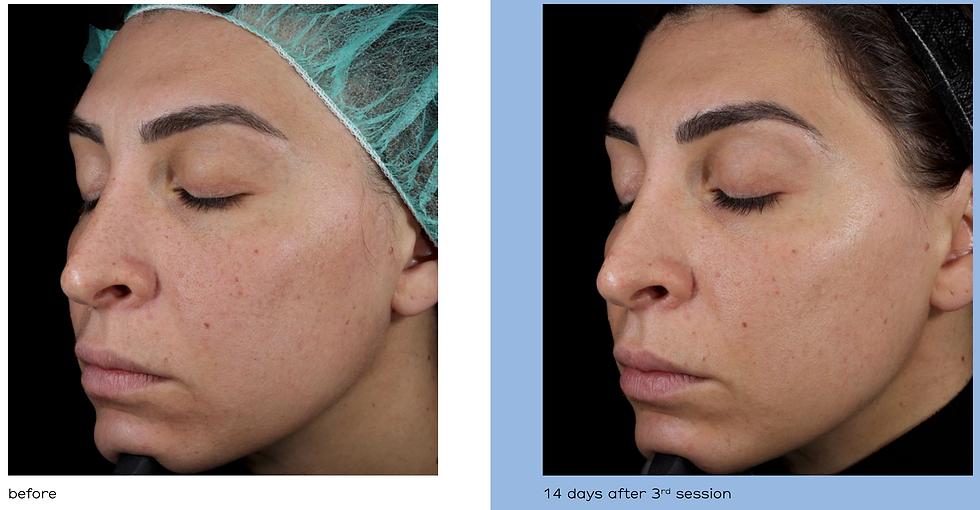
After treatment three (weeks 8–10): structural improvements clearer. Texture more refined, tone more even, lines around the eyes and mouth visibly softer.
Week 12: clinical data shows 91% of patients were satisfied with their results at this point.
Published clinical data shows fine line improvement lasting up to 24 weeks around the mouth and up to 16 weeks around the eyes. These are the two areas Revitalis was specifically designed for, and the evidence reflects that focus.
A standard course is three to four sessions, spaced two to four weeks apart, followed by a maintenance session every three to six months. Many patients combine Revitalis with other treatments - it pairs well with Profhilo, polynucleotides, and energy-based devices like Lumecca - for a more comprehensive skin quality programme.
How Does Revitalis Compare to Other Skin Boosters?
This is one of the most common questions we hear at The London Road Clinic, particularly from patients in Nottingham and Lincoln who have already explored Profhilo or Juvederm Volite elsewhere.
Profhilo is a bioremodeller: it’s designed to stimulate collagen and elastin production across broader areas of the face and neck, and works well for patients with more generalised skin laxity. Revitalis, by contrast, is precision-engineered for a specific problem: fine lines in the periocular and perioral zones. The two aren’t competitors - they’re frequently used together as part of a layered skin quality programme.
Juvederm Volite is another injectable moisturiser with comparable hydration goals, though it uses a lightly crosslinked HA formula. For the most delicate areas - particularly around the eyes - non-crosslinked products like Revitalis carry a more favourable risk profile. Your consultation will always consider your specific anatomy, concerns, and existing treatments before any recommendation is made.
Is Revitalis Right for Me?
The Revitalis Skin Booster in Newark may be worth exploring if you’re noticing one or more of the following:
Fine lines around the eyes (crow’s feet) that are deepening or becoming static
Small vertical lines above the lip that catch lipstick or become more visible in certain light
Persistent dryness in these areas that topical skincare isn’t fully addressing
Loss of elasticity or a crepey quality to the skin around the eyes or mouth
General dullness or flatness that your current routine isn’t shifting
Revitalis is suitable for all skin types and tones, and for a wide age range. It’s a treatment some patients use as a preventive measure in their thirties, and others turn to for meaningful improvement in their fifties and beyond.
It is not designed for moderate to severe skin laxity requiring structural lift, deep static folds, or as a standalone treatment for pigmentation. If those are your primary concerns, our team will talk you through the options that are genuinely better suited - treatments such as Profhilo, or Lumecca IPL, depending on what your skin needs.
Book a Consultation at The London Road Clinic
As with every treatment at LRC, a consultation comes first. Our team will take the time to understand your skin, your concerns, and your goals - and give you an honest view of whether Revitalis is the right choice, what results may be realistic for you, and whether it’s best used alone or alongside something else. There’s no obligation, and we’ll never recommend something that isn’t genuinely right for you.
The London Road Clinic is a JCCP-accredited, doctor-led aesthetics clinic at 65 London Road, Newark, Nottinghamshire, NG24 1RZ. We serve patients travelling to us from across Nottingham, Lincoln, Grantham, Mansfield, Retford, and the wider East Midlands.


