Hair Loss and Thinning: When to Seek Help and What to Expect
Hair thinning affects more people than openly discuss it. Clinic Director Lydia Griffin explains the most common types, what drives them, when in-clinic treatment is worth considering, and what realistic outcomes look like.
Published 21 May 2026
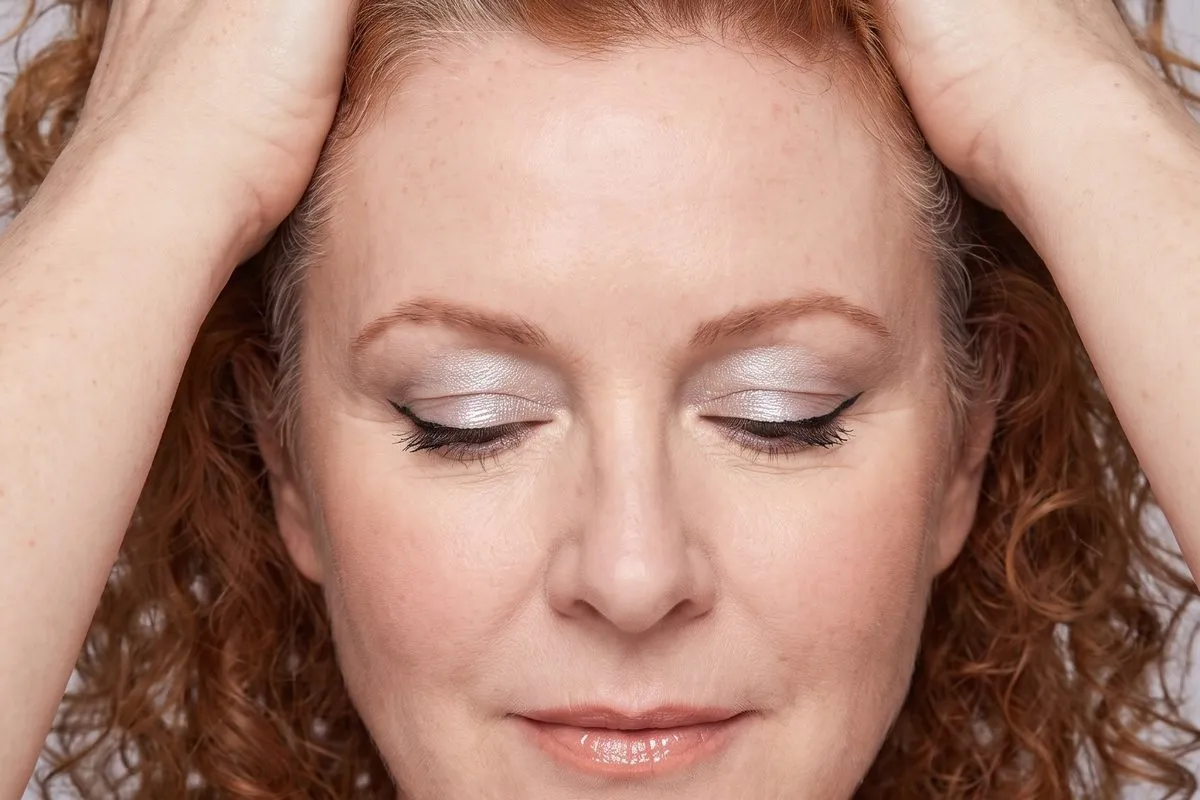
Most people who are losing hair notice it privately for months before mentioning it to anyone. A widening parting, more hair on the pillow, a ponytail that feels thinner, a hairline that looks different. The reluctance to raise it is understandable. What helps is knowing what is happening and whether there is anything worth doing about it.
This article covers the most common types of hair loss seen in aesthetic clinic patients, what drives them, when in-clinic treatment makes sense, and what it can realistically achieve.
Understanding the hair growth cycle
Every hair follicle moves independently through a cycle of three phases. Anagen is the active growth phase, lasting two to seven years. Catagen is a brief transitional phase. Telogen is the resting phase, lasting around three months, at the end of which the hair sheds and the follicle restarts. On a healthy scalp, around 85-90% of follicles are in anagen at any one time. The average person sheds 50-100 hairs per day as part of this normal cycle.
Hair loss becomes pathological when this balance shifts: too many follicles enter telogen simultaneously, follicles miniaturise over time and produce progressively finer hair, or follicles stop cycling altogether.
The most common types
Androgenetic alopecia is the most prevalent form, affecting a significant proportion of both men and women by midlife. In men it follows a recognisable pattern. In women the pattern is typically more diffuse: a widening central parting, generalised thinning across the top of the scalp, with the frontal hairline usually preserved. The underlying mechanism is the sensitivity of certain follicles to dihydrotestosterone (DHT). Androgenetic alopecia is genetic and progressive. It can be slowed and density supported, but it is not reversed.
Telogen effluvium is diffuse shedding triggered by a systemic event that shifts a large number of follicles into the resting phase simultaneously. Common triggers include significant illness or fever, major surgery, crash dieting, severe emotional stress, childbirth and thyroid dysfunction. In most cases where the trigger resolves, the shedding is self-limiting and hair density recovers over six to twelve months.
Nutritional deficiency. Ferritin (stored iron), vitamin D, zinc and B vitamins all play a role in healthy hair cycling. Bloodwork before beginning any treatment course is an important step.
Alopecia areata is an autoimmune condition that produces patchy hair loss. It requires dermatology input and is outside the scope of aesthetic scalp treatment. If the presentation suggests alopecia areata, we say so and refer.
Traction alopecia results from chronic tension on the follicle from tight hairstyles. It is progressive if the traction continues and partially reversible if caught early.
Before any in-clinic treatment: rule out the addressable causes
The most useful first step in hair loss is a proper assessment that establishes what is driving the change. This means a detailed history and, in most cases, basic blood tests covering ferritin, full blood count, thyroid function, vitamin D and zinc.
Where a nutritional deficiency or thyroid dysfunction is identified, addressing that directly produces better results than in-clinic scalp treatment alone.
When in-clinic treatment helps
For patients with androgenetic alopecia in its early to moderate stages, in-clinic treatment can meaningfully slow the progression, improve scalp environment and in some cases support a modest recovery in density. What it cannot do is stop androgenetic alopecia in the way that medical treatments (finasteride, minoxidil) can.
Scalp mesotherapy with microneedling combines controlled micro-channels in the scalp with targeted serums designed to improve follicular circulation, nutrient delivery and scalp environment.
PRP and iPRF for scalp introduce concentrated growth factors or a sustained-release fibrin matrix directly into the scalp tissue. The evidence base for PRP in hair loss is growing, with multiple published studies showing improvements in hair count and density in androgenetic alopecia.
Exosome therapy for scalp using BLESKIN EXXO applies cell-derived signalling vesicles to the scalp following microneedling, supporting the repair and renewal environment around the follicle.
Polynucleotides for scalp are increasingly used in hair restoration protocols for their anti-inflammatory properties and support of tissue repair.
Following an in-person consultation with our prescribing clinician, in line with current GMC, NMC, GPhC and GDC guidance.
What to expect
Hair treatment courses require patience. The hair growth cycle means that any in-clinic stimulus takes months to produce visible results, typically three to six months before meaningful change in density is apparent. A course of treatment is generally six sessions or more, and results are maintained rather than permanent.
Frequently asked questions
How do I know if I am losing more hair than normal?
Should I get blood tests before starting a hair treatment course?
Can PRP regrow hair that has already been lost?
Is hair loss treatment different for women than men?
Can tight hairstyles cause permanent hair loss?
How often would I need maintenance sessions after a course?
Hair loss has causes that need a doctor rather than a treatment, and timing changes what is possible. A consultation establishes the cause before anything is recommended.
Treatments that may help
Related advice

PRP vs Polynucleotides for Hair: Which Is Right for You?
A clinical comparison of PRP (platelet-rich plasma) and polynucleotide injections for hair restoration at The London Road Clinic: how each works, the evidence, and how to decide between them. Written by Dr Shahe Boghossian, Medical Consultant, GMC 5204600.
21 May 2026

Patient Guide: Microneedling
A comprehensive patient guide to medical-grade microneedling at The London Road Clinic: how SkinPen works, what it treats, what to expect, and how it compares to other collagen induction treatments. Written by Lydia Griffin, Clinic Director, JCCP No. 002569.
21 May 2026

Patient Guide: Polynucleotides
A comprehensive patient guide to polynucleotide injections at The London Road Clinic: how they work, what Croma Polyphil is, who they suit, and how they compare to other regenerative injectables. Written by Dr Shahe Boghossian, Medical Consultant, GMC 5204600.
21 May 2026