Skin concern
Under-Eye Concerns
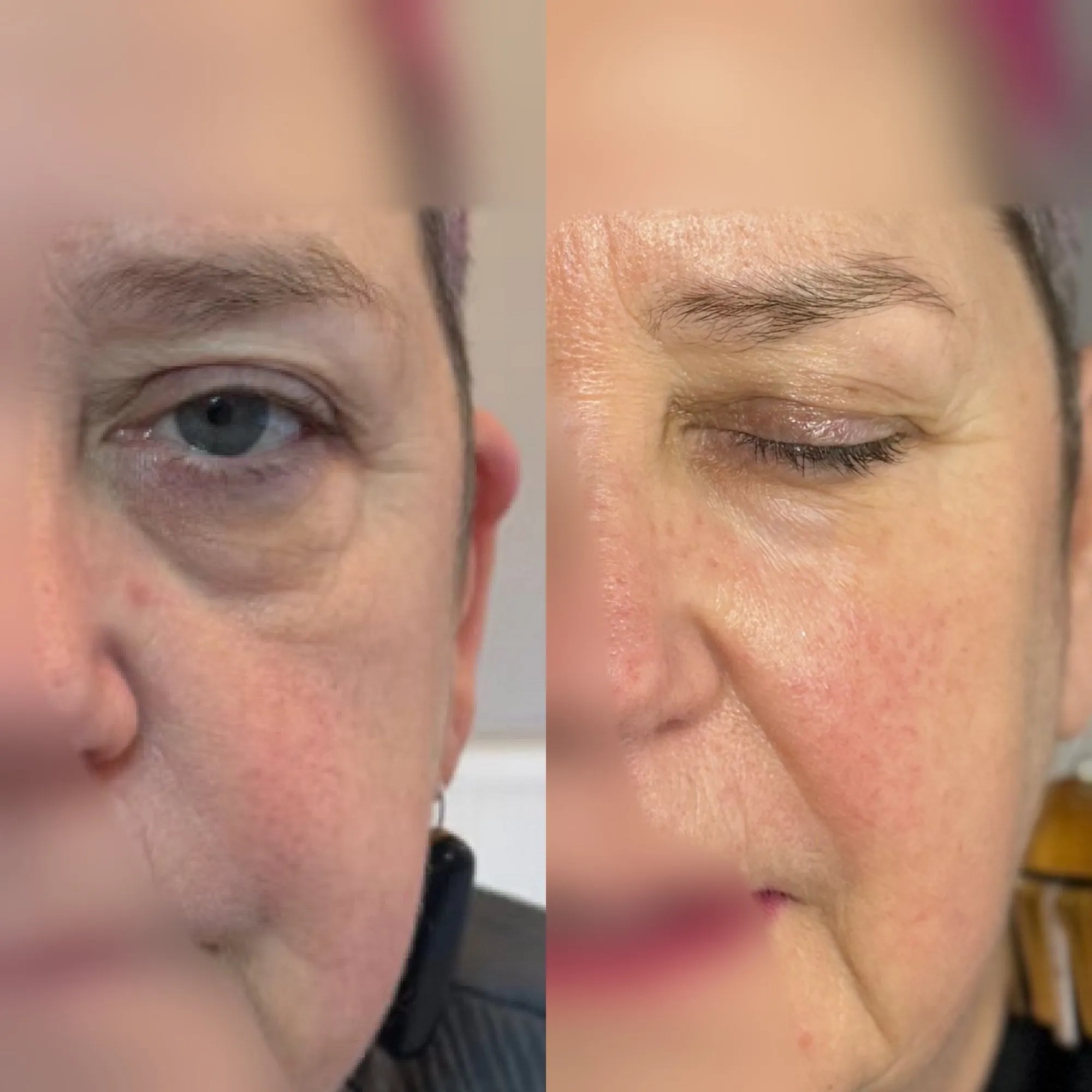
Dark circles, hollowing and fine lines under the eyes have different causes, each requiring a different approach. Volume loss and vascular shadowing look similar but are treated very differently.
Understanding the cause
What's happening in your skin
Not all dark circles are the same
Dark circles have three main causes: volume loss creating a shadow in the tear trough; vascular shadowing where vessels show through thin skin; and hyperpigmentation in the periorbital skin itself. A treatment targeting one cause will not address the others.
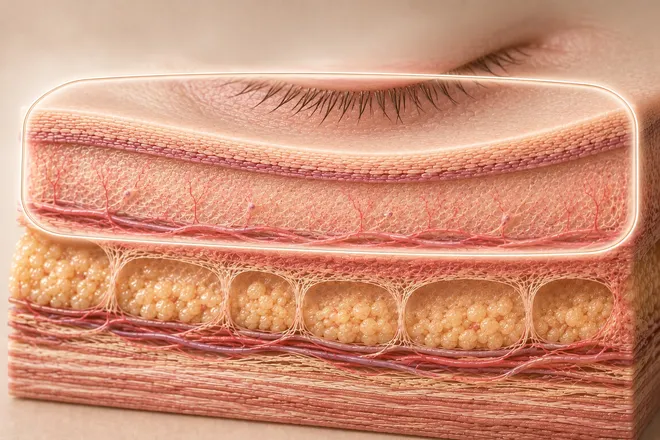
The under-eye area loses structural support earlier than most of the face. Subcutaneous fat diminishes, the skin thins, and the bony orbital rim becomes more visible, creating a hollow that casts a shadow regardless of how much sleep you have had. Separately, the periorbital skin is exceptionally thin, often allowing the underlying muscle and vasculature to show through as a bluish or purplish tone. These two presentations can coexist, and identifying which is dominant shapes the entire treatment decision.
Volume loss in the tear trough
The tear trough is a ligamentous attachment between the lower eyelid and the orbital rim. As volume depletes, this attachment becomes more visible as a groove, casting a shadow that topical products cannot fill.
Dermal filler placed precisely in the tear trough restores the volume that creates the shadow. This is one of the more technically demanding facial injection sites due to the proximity to the eye and the vascular anatomy of the region. At The London Road Clinic, tear trough treatment is carried out following an in-person consultation with our prescribing clinician. A cannula technique is used rather than a needle, which reduces bruising risk and the chance of vascular complications. Results are typically visible immediately and last twelve to eighteen months.
Skin quality and fine lines
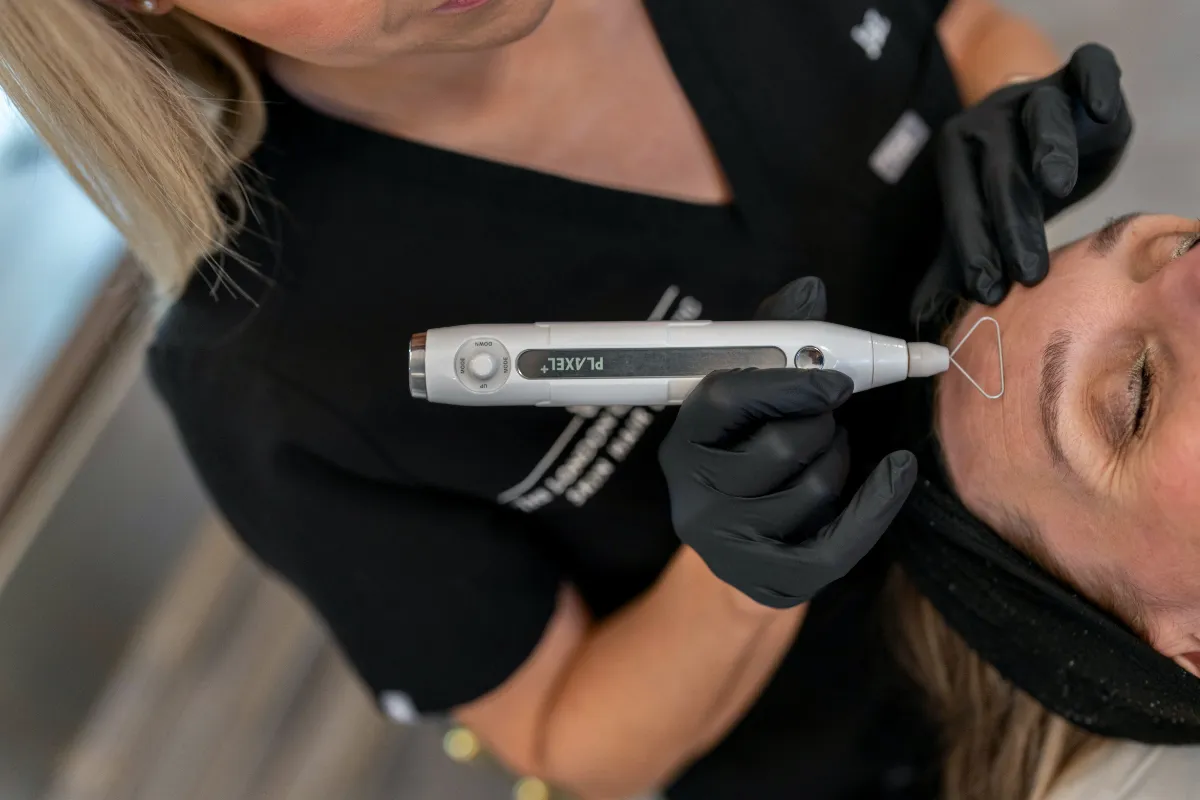
The periorbital skin is the thinnest on the face and loses collagen faster than surrounding areas. Polynucleotides delivered around the eye stimulate local collagen production and improve skin elasticity without adding volume.
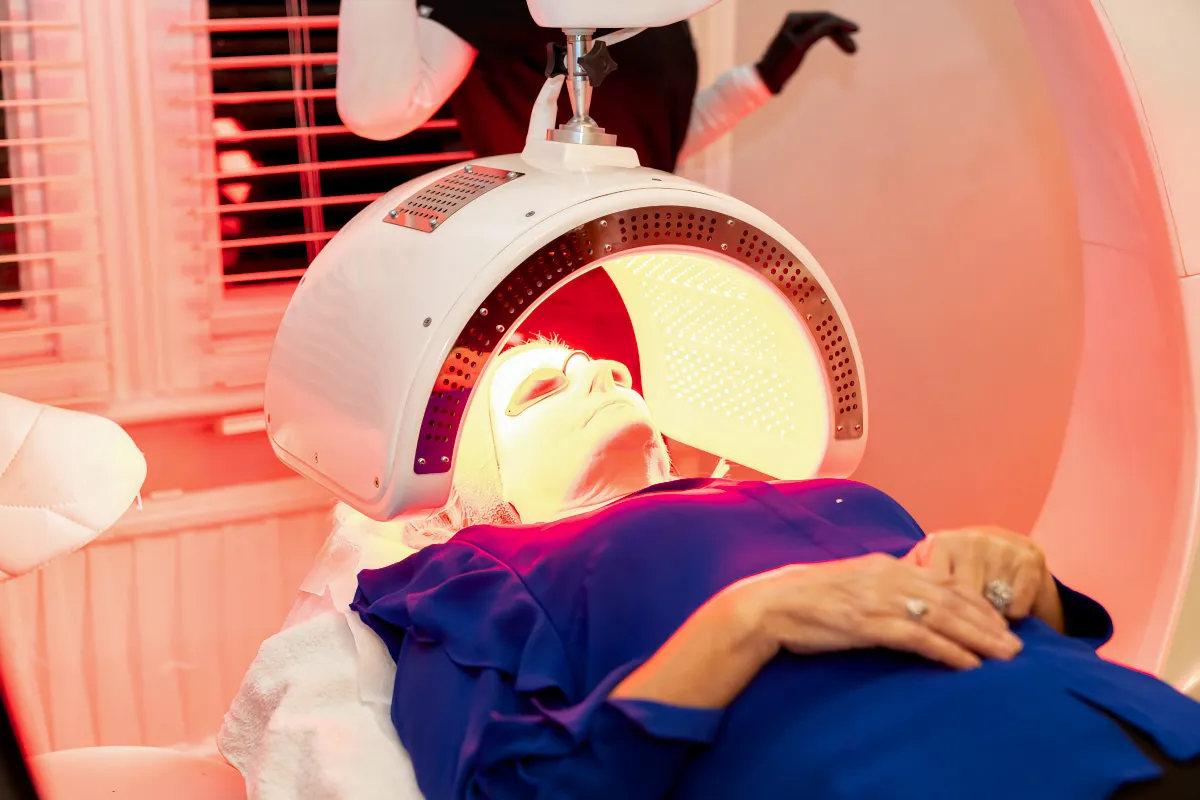
Where fine lines and skin quality are the concern rather than volume loss, polynucleotide injections and skin boosters address the periorbital skin directly. Polynucleotides stimulate fibroblast activity and increase local collagen production, improving crepiness and texture over a course of two to four sessions. LED light therapy supports the same collagen pathway non-invasively and can be used as a standalone or alongside injectable protocols.
Resurfacing the eyelid skin itself
In a randomised controlled trial of eighteen people, one side of the face was treated with nitrogen plasma over three sessions and the other side left untreated. Assessed by evaluators blinded to which side was which, the treated side scored better for both periorbital wrinkles and pigmentation.
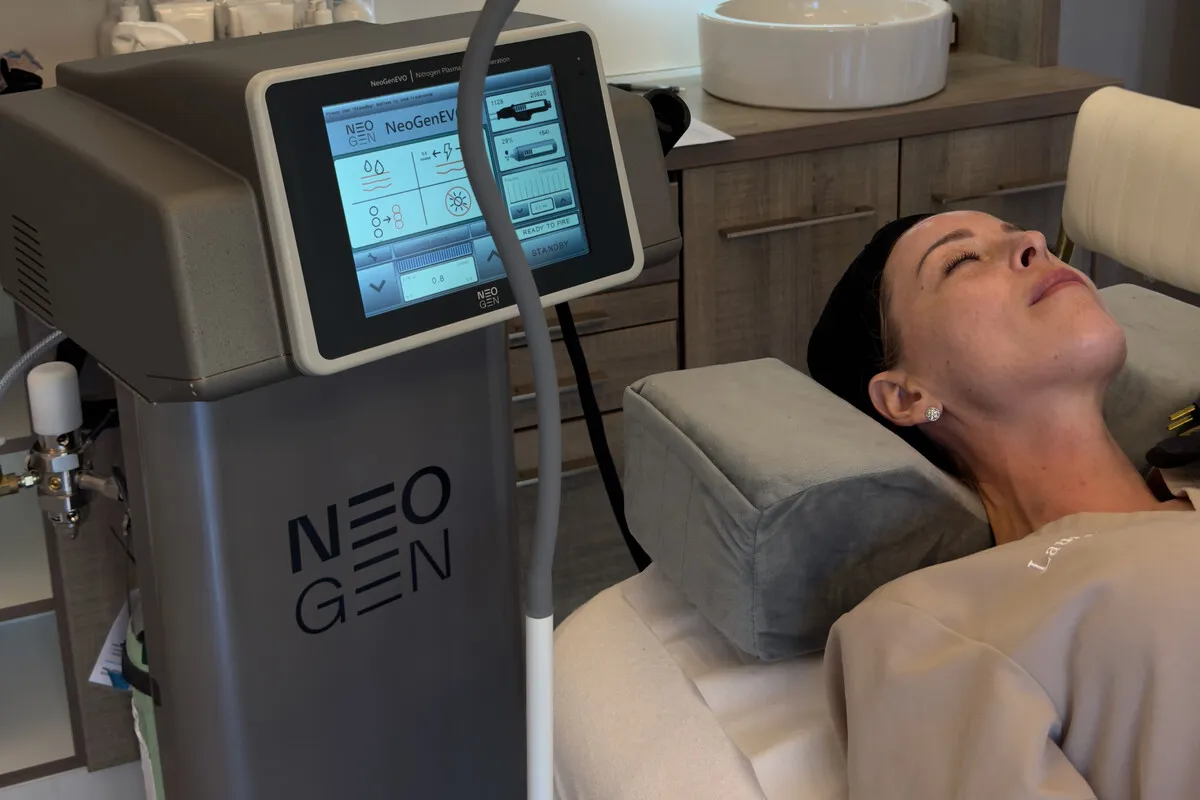
Polynucleotides and skin boosters improve the eyelid skin from below. Resurfacing works on it from above, and that is the option we could never offer this close to the eye, because needles cannot safely reach the lash line and light-based devices need a colour to aim at. Nitrogen plasma needs neither. The energy lands on the skin surface, nothing enters the skin, and your clinician can work right up to the eyelid margin. The evidence sits in the same place: a randomised trial treated one side of eighteen faces over three sessions, and evaluators blinded to which side was which scored the treated one better for lines and pigmentation. Energist helped fund it, and it remains the only randomised evidence behind the device. The recovery is a real week of your life, with redness, dryness and flaking, so it belongs in a quiet stretch rather than before an event. Through the introductory period, Energist's head of UK training oversees every NeoGen treatment here, so your clinician plans a course around her clinic days at consultation.