Hair concern

Unwanted Hair

Unwanted hair is persistent hair growth on the face or body that causes ongoing maintenance burden, skin irritation or distress. Laser hair removal uses targeted light energy to damage the follicle and reduce regrowth permanently over a course of sessions. Professional waxing removes hair from the root for a clean result that lasts two to four weeks. The right approach depends on your skin tone, hair colour, the area, and how much permanence you want.
Unwanted Hair at The London Road Clinic

Understanding the cause

What's happening in your skin

01

Shaving works above the skin. Laser works at the follicle.

Temporary methods cannot physically reach the follicle. Laser can, and that difference in depth is the difference between a short reprieve and permanent reduction.

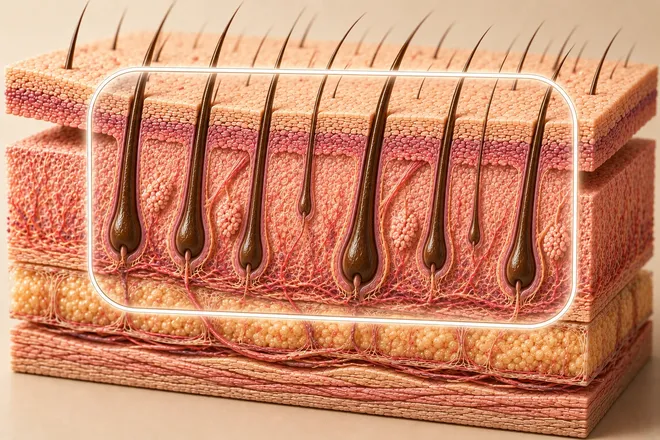
Hair growth is governed by androgens, genetics and follicle density. The follicle itself is the relevant unit: each one cycles independently through active growth, transition and rest phases, and will produce hair indefinitely unless the follicle is damaged or the hormonal signal driving it is removed. Temporary methods such as shaving, threading and depilatory creams work at or above the skin surface. They do not reach the follicle, so regrowth reappears within days. Professional waxing removes the hair from the root, which interrupts the cycle for two to four weeks and weakens the follicle incrementally over time. Laser targets the follicle directly. The difference in outcome over twelve months is significant.

02

Hormonal and genetic factors drive persistent regrowth

Polycystic ovary syndrome is the most common hormonal driver in women, producing persistent facial and body hair that can return between waxing sessions within days.

Several factors increase hair growth beyond what a person would choose. Polycystic ovary syndrome is the most common hormonal driver in women, producing persistent facial and body hair that can return between waxing sessions within days. Natural androgen shifts during and after menopause have a similar effect. Certain medications, including some hormonal therapies and corticosteroids, can increase hair growth as a side effect. In other cases it is simply genetic: higher follicle density in visible areas, running through families.

03

Where a hormonal cause exists, laser reduces the burden. It does not treat the cause.

A GP referral for investigation runs alongside laser treatment, not instead of it. We flag this at your consultation if it is relevant.

Where there is an underlying hormonal driver, laser hair removal reduces the maintenance burden significantly. It does not address the hormone. For clients with conditions such as PCOS, laser reduces how often removal is needed rather than resolving the underlying condition. A GP referral for hormonal investigation runs alongside treatment, not instead of it. We will flag this at your consultation if it is relevant.
Recommended treatments

What we use for unwanted hair

Common questions

Frequently asked about unwanted hair

Does laser hair removal work on all skin tones?
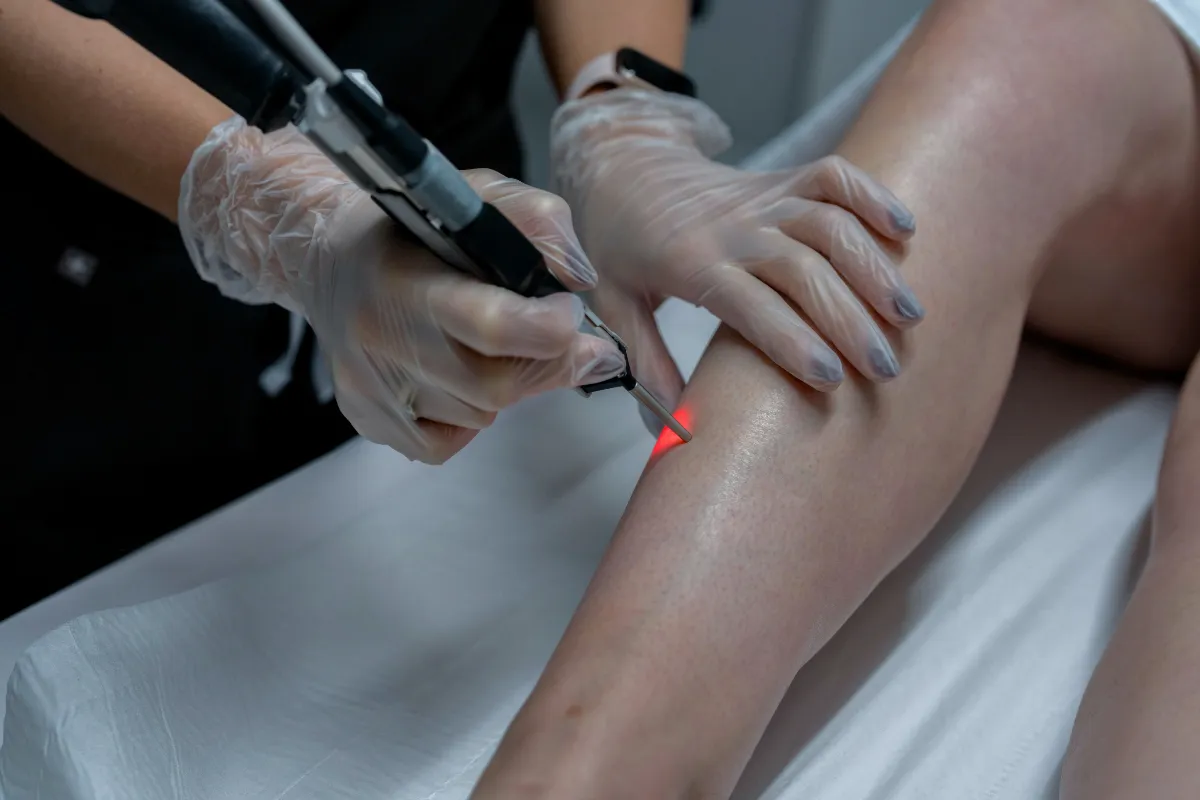
The Cynosure Elite iQ offers both 755 nm Alexandrite and 1064 nm Nd:YAG wavelengths. The Nd:YAG is clinically established as safe and effective for darker skin tones, including Fitzpatrick types IV–VI. A patch test and Fitzpatrick assessment at consultation confirms the correct wavelength and settings for your skin.
Does laser hair removal hurt?
Most clients describe the sensation as a warm snap or elastic-band flick against the skin. The Cynosure Elite iQ includes an integrated cooling system to reduce discomfort. Sensitivity varies by area: the upper lip and bikini line tend to be more sensitive than legs or arms. The sensation is well-tolerated by the majority of clients.
How many sessions will I need?
Most areas require six to eight sessions for significant permanent reduction. Hormonal areas such as the chin or lower abdomen may require more and occasionally benefit from maintenance sessions. We give an honest estimate at your consultation based on the area, your hair colour and density, and your skin type.
Can I have laser hair removal if I have darker skin?
Yes. The Cynosure Elite iQ's 1064 nm Nd:YAG wavelength is appropriate for medium to darker skin tones and has been widely used across Fitzpatrick types IV–VI. We always confirm suitability at consultation with a patch test and Fitzpatrick assessment.
Is laser hair removal permanent?
Laser hair removal produces permanent reduction, not total permanent removal. Most clients see significant reduction in the treated area after a full course. Follicles that are successfully treated do not regrow. A small number may survive or reactivate, particularly in hormonally driven areas, and occasional maintenance sessions can address these.
What is the difference between laser hair removal and IPL?
Laser delivers a single coherent wavelength to the follicle with high precision. IPL delivers a broad spectrum of light, which is less targeted and typically requires more sessions for equivalent results. The London Road Clinic uses the Cynosure Elite iQ laser, a medical-grade device with published clinical evidence and dual wavelengths suited to different skin types.
Can I have laser hair removal if I am pregnant or breastfeeding?
Laser hair removal is not recommended during pregnancy. If you are breastfeeding, discuss this at your consultation as individual assessment is required. LYCON precision waxing is available as an alternative during this period.
Why is LYCON waxing not permanent?
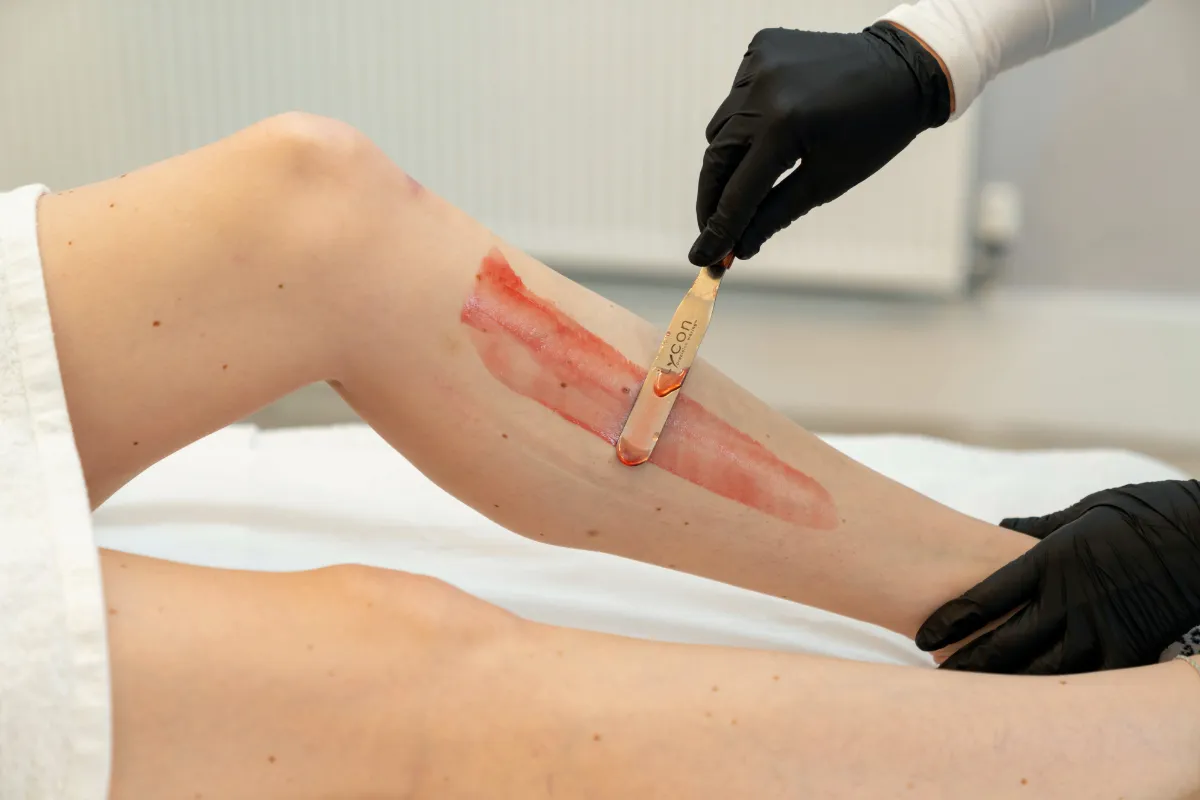
LYCON removes the hair from the root, which interrupts the growth cycle for two to four weeks and weakens the follicle over time. The follicle remains intact and capable of regrowth. Permanent reduction requires damaging the follicle itself, which requires energy-based treatment. LYCON is the right choice when permanence is not the goal, when laser is not appropriate, or as a complement between laser sessions.
How should I prepare before a laser session?
Shave the area 12–24 hours before your appointment. Avoid waxing, threading or depilatory creams for four to six weeks before starting a course. Avoid sun exposure and fake tan on the treatment area for four weeks before each session. Arrive without moisturiser, deodorant or perfume on the area. Tell us at consultation if you are taking any photosensitising medications.
What areas can you treat with the Cynosure Elite iQ?
Upper lip, chin, jawline, sideburns, underarms, bikini line, Brazilian, full legs, lower legs, arms, forearms, back, chest, abdomen and shoulders. If you have a specific area in mind that is not listed, ask at consultation.

Ready to take the next step?

Book a consultation

Your clinician will assess your skin, review your history and design a treatment plan matched to your specific presentation, not a generic protocol.

Medically reviewed by Dr Shahe Boghossian, Medical Consultant, GMC 5204600 . Last reviewed 21 May 2026.

Registered with & recognised by

Book a consultation WhatsApp