Skin treatment
Mole Check in Newark
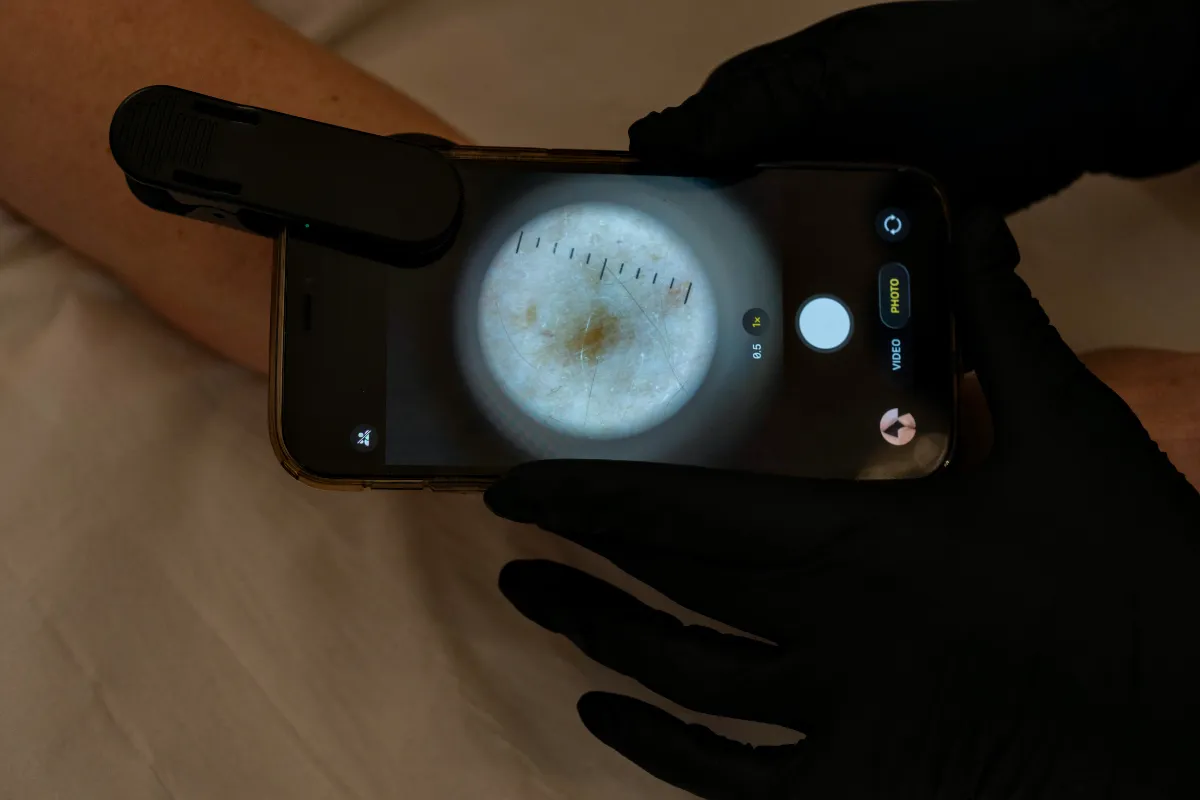
A private mole check for new or changing moles and skin lesions. Dermoscopic imaging read by a UK consultant dermatologist, not AI triage, with a written report in 24 to 48 hours.
- Price
- From £50 per mole
- Duration
- 30 mins
- Results
- Reports are usually returned within 24 to 48 hours, generally under 72 hours
- Longevity
- Depends on the lesion and whether monitoring, referral or removal is advised
The treatment
How Map My Mole Check works
Close-up and dermoscopic images of the mole or lesion are captured using a medical-grade dermoscope, then uploaded securely to the Map My Mole platform for review by a UK consultant dermatologist. You receive a written report that advises reassurance, monitoring or referral to an appropriate clinical pathway. It is designed for early detection and fast expert review, not as a replacement for urgent NHS skin-cancer pathways.
What patients notice
What to expect
- Consultant dermatologist review
- Fast turnaround
- Medical-grade dermoscopic imaging
- Clear next steps to reassure, monitor or refer
- Non-invasive with no downtime
Before you book
Is this treatment right for you?
Suitable for
- Adults who want expert assessment of a specific mole or lesion, or who want reassurance about a changing or unusual-looking mark.
Not suitable for
- The clinic states it is not for urgent concerns. If a lesion is rapidly changing, bleeding, very dark or irregular, or you feel unwell, urgent GP or dermatology care should be prioritised.
In their own words
I had a lovely experience with Jaz, she was so kind and sweet. I was a bit nervous about my first mole checked but Jaz put me at ease. Thank you ladies can’t recommend enough
Verified Fresha review. Displayed as submitted. Read all 1,500+ reviews →
After your appointment
Aftercare
There is no downtime. Follow the report advice, use daily SPF, continue self-checks and return promptly if the lesion changes.
What the evidence shows
A mole viewed with the naked eye and the same mole viewed through a dermoscope are not the same picture. The dermoscope combines magnification with polarised light, so pigment patterns sitting below the surface of the skin become visible. Structures that decide whether a mark is worth a specialist’s attention are largely invisible without one.
That difference has been measured. In a randomised trial of clinicians working in primary care, adding a dermoscope moved sensitivity a long way while specificity stayed where it was:
Naked eye examination compared with dermoscopy, randomised trial in primary care
- 54.1%
- sensitivity, naked eye alone
- 79.2%
- sensitivity, with a dermoscope
- 71.3%
- specificity, naked eye alone
- 71.8%
- specificity, with a dermoscope
Argenziano G et al, as reported in Jones OT, Jurascheck LC, van Melle MA et al. BMJ Open 2019;9:e027529. PMID 31434767. Individual results vary.
Sensitivity is the share of lesions that warrant further attention which the examination correctly flags. Specificity is the share of harmless lesions correctly left alone. Both numbers matter, and the second is why an unnecessary referral is not a free action: it costs an appointment, a wait and a fortnight of worry. The trial is worth reading because sensitivity rose by around 25 percentage points and specificity did not pay for it.
A meta-analysis restricted to nine studies carried out in clinical settings, rather than on photographs in a lecture theatre, put the relative diagnostic odds ratio for dermoscopy against naked eye examination at 15.6, with a 95% confidence interval of 2.9 to 83.7. Removing two outlying studies brought it to 9.0 (Vestergaard ME, Macaskill P, Holt PE, Menzies SW. British Journal of Dermatology 2008;159(3):669-76. PMID 18616769). The confidence interval is wide, which is honest reporting on nine studies rather than a weak result.
The second half of this service is that the images travel to someone who reads them all day. In a randomised trial of remote review within the same systematic review above, adding dermoscopic images to ordinary clinical photographs took sensitivity from 86.57% to 92.86% and specificity from 72.33% to 96.24%. A consultant dermatologist reads your images, not an algorithm sorting pictures into piles. The platform behind that review is Map My Mole, run by Community Dermatology Limited.
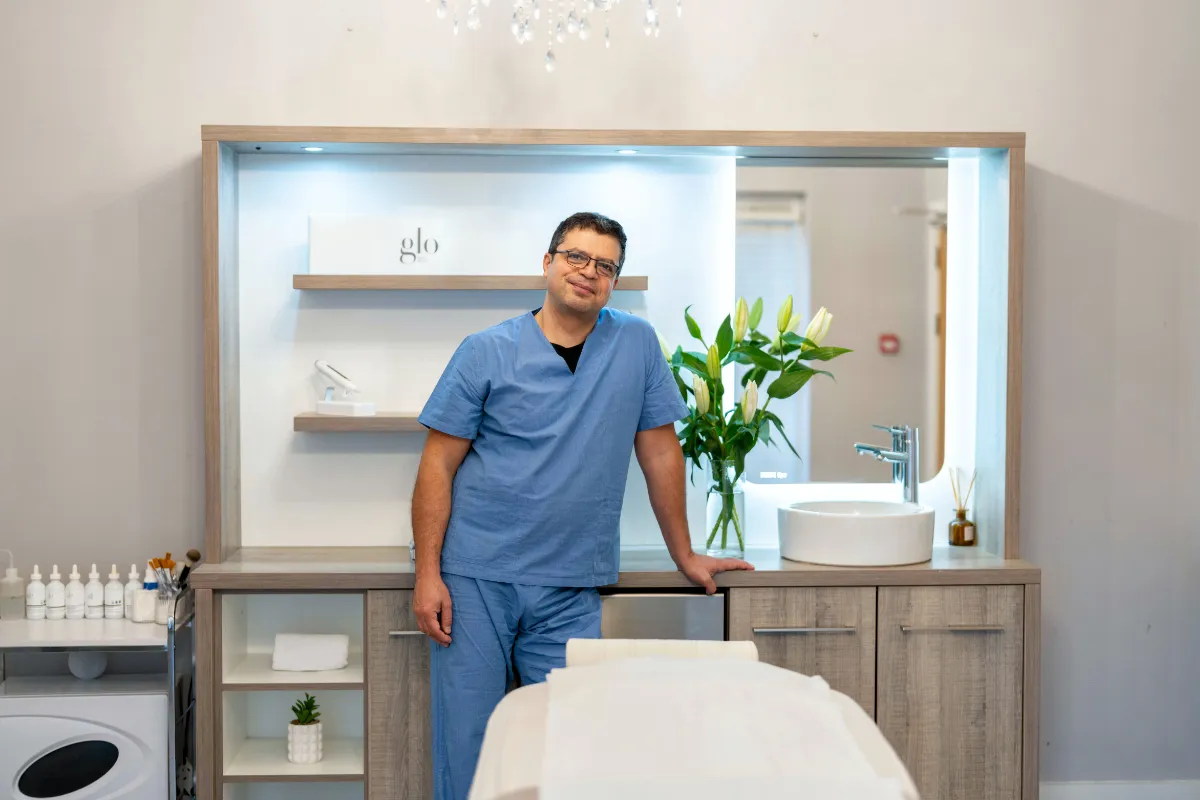
The pattern I see most often is someone who noticed a change months ago and talked themselves out of it. Not because they were not worried, but because the alternative was a GP appointment they felt they could not justify. A check that takes minutes and comes back inside two days removes that excuse, and that is most of its value. What it does not do is replace the urgent route. If a mark is changing quickly or bleeding, that is a GP appointment today, not a photograph.
Dr Shahe Boghossian, Medical Consultant
What the report can and cannot tell you
Every service of this kind has limits, and a mole check that leaves them unstated is worth less than one that sets them out.
It is not a biopsy. Only laboratory examination of tissue can confirm what a lesion is. What the report gives you is a consultant’s opinion on whether that step is warranted, which is the question most people arrive with.
It is not a whole-body survey. We image the marks you bring to the appointment. If your concern is your overall picture rather than one specific mark, say so when you book so the appointment can be planned properly. People with many atypical moles, or a personal or family history of skin cancer, belong under regular dermatological review rather than relying on occasional checks.
A reassuring report is a snapshot. It describes the lesion as it was on the day it was imaged. Anything that changes afterwards needs looking at again, which is why the report tells you what to watch for rather than closing the subject.
The outcome is one of three things: reassurance, a recommendation to monitor with specific guidance on what would count as a change, or a recommendation to refer onward. Reports are usually back within 24 to 48 hours and generally under 72.
Who we send to their GP instead
Some presentations should not come to us at all, and saying so plainly is more useful than a page that takes every booking.
If a mole or mark is changing quickly, bleeding, crusting, itching persistently, has turned very dark or gone ragged at the edges, or if you feel unwell alongside it, do not book with us. Go to your GP and say you are worried about a changing mole. The urgent NHS referral route exists for that presentation, and it is faster and more thorough than anything a private imaging appointment can offer. Nothing here should delay that by a day.
What this service suits is the other situation, and it is the more common one: a mark you have noticed, are not certain about, and do not want to leave sitting at the back of your mind for six months. Or a baseline record of something you intend to keep an eye on.
Further reading: mole checks in Newark and Lincolnshire, which covers the ABCDE signs and what to look for between appointments.
Where our mole check patients travel from
The clinic is at 65 London Road, Newark-on-Trent, NG24 1RZ, with free parking at the front.
This is a short appointment. Image capture takes minutes, the report arrives by email, and there is no downtime, so it is a single visit rather than a course. Patients travel in from Balderton, Farndon, Collingham, Southwell, Bingham and Ollerton across Nottinghamshire, and from Lincoln, Grantham and Sleaford over the Lincolnshire border.
At £50 per mole, most people bring one or two marks they have been wondering about. If you have several, say so when you book so enough time is set aside.
Related: skin lesion removal and cryotherapy for skin tags and lesions, both of which begin with the same question about whether a lesion is appropriate to treat at all.
Everything starts at consultation. What that looks like from Lincoln and from Grantham.
Common questions