Skin concern

Moles & Skin Lesions

Most marks on adult skin are benign, and most of them look alike to the naked eye. What a lesion turns out to be decides whether it is left alone, monitored, removed or sent to a specialist, so identifying it comes before any decision about treating it.

Understanding the cause

What's happening in your skin

01

Most adult skin marks are benign

Skin tags, seborrhoeic keratoses, cherry angiomas and ordinary moles account for most of what people bring in. They behave differently from one another and look much the same without magnification.

Skin tags are soft outgrowths that catch on collars, seatbelts and jewellery. Seborrhoeic keratoses are the waxy, stuck-on brown patches that start arriving from the forties onward and are routinely mistaken for moles. Cherry angiomas are small red vascular spots. Ordinary moles are clusters of pigment cells, most of them acquired through childhood and early adulthood. None of these is a problem in itself. The reason a new mark still warrants a look is that a mark you have noticed is a mark you cannot name, and naming it is the whole of the first appointment.

02

The naked eye is the wrong instrument

In a randomised trial in primary care, adding a dermoscope moved sensitivity from 54.1% to 79.2%, while specificity held at 71.3% and 71.8%.

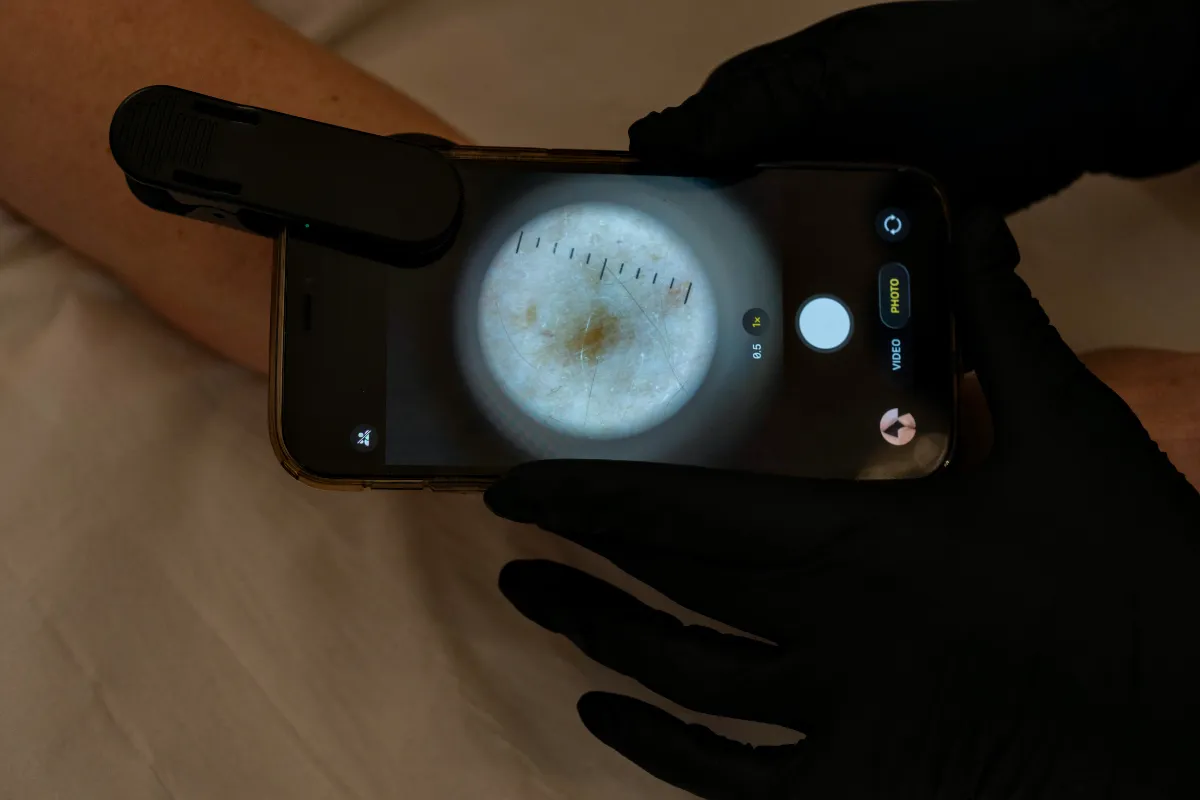
A dermoscope combines magnification with polarised light, so pigment networks, vessel patterns and border architecture sitting below the surface become visible. Those structures are what separate one brown mark from another, and they are largely invisible without the instrument. The second pair of numbers matters as much as the first. Specificity is the share of harmless lesions correctly left alone, and an examination that flags everything pays for its sensitivity in unnecessary referrals, waiting and worry.

03

What it is decides what happens next

Nothing that looks suspicious is removed here as a cosmetic procedure. Assessment comes first on every lesion, and that order is not negotiable.

Three routes follow an assessment. A benign lesion that catches, bleeds or bothers you can be removed, by cryotherapy for suitable surface lesions or by doctor-led shave removal, cautery or minor excision where that suits the lesion better. A lesion causing no trouble can be imaged and monitored, with specific guidance on what would count as a change. A lesion that needs a specialist opinion is sent for one, and we say so rather than treating it.
Recommended treatments

What we use for moles & skin lesions

Clinical perspective

Someone comes in about pigmentation or sun damage, we assess the skin properly, and a lesion turns up that needs a dermatologist rather than a light-based treatment. We do not treat anything that looks suspicious. That rule is not negotiable and it is one of the reasons the assessment comes before the treatment on everything we do, not after it.

Assessment before treatment Nothing suspicious is treated Referral where uncertain
The London Road Clinic, clinical policy on lesion assessment

In their own words

Very professional service. Excellent consultation with lovely staff member. She explained fully what she was doing and what would happen afterwards. Can definitely recommend.
Teresa · with Laura · 14 Jul 2026

Verified Fresha review. Displayed as submitted. Read all 1,500+ reviews →

Common questions

Frequently asked about moles & skin lesions

What is the difference between a mole and a skin tag?
A mole is a cluster of pigment-producing cells sitting within the skin, usually flat or slightly raised and brown. A skin tag is a small outgrowth of ordinary skin on a narrow stalk, usually flesh-coloured, and found where skin rubs against skin or clothing. They are different structures and are removed by different methods, which is one reason a lesion is identified before anything is booked.
Can any mole be removed for cosmetic reasons?
No. A lesion is removed cosmetically only once a clinician is satisfied it is appropriate to remove, and anything diagnostically uncertain is referred rather than treated. Removing a mark that should have been assessed by a specialist destroys the thing that needed looking at, which is why the assessment always comes first here.
Which marks should go to a GP rather than a clinic?
Go to your GP, and say you are worried about a changing mole, if a mark is changing quickly, bleeding, crusting, itching persistently, has become very dark or has gone ragged at the edges, or if you feel unwell alongside it. The urgent NHS referral route exists for that presentation and is faster and more thorough than any private imaging appointment. Nothing we offer should delay it.
Does removing a skin lesion leave a scar?
Any removal that breaks the skin leaves some mark. Cryotherapy on a suitable surface lesion usually heals with little to show for it, though temporary lightening or darkening of the treated skin is common. Shave removal and minor excision leave a small scar that matures over months. Your clinician will set out what to expect for your specific lesion and site before you decide, and daily SPF once healed reduces visible pigment change.
Will a removed lesion grow back?
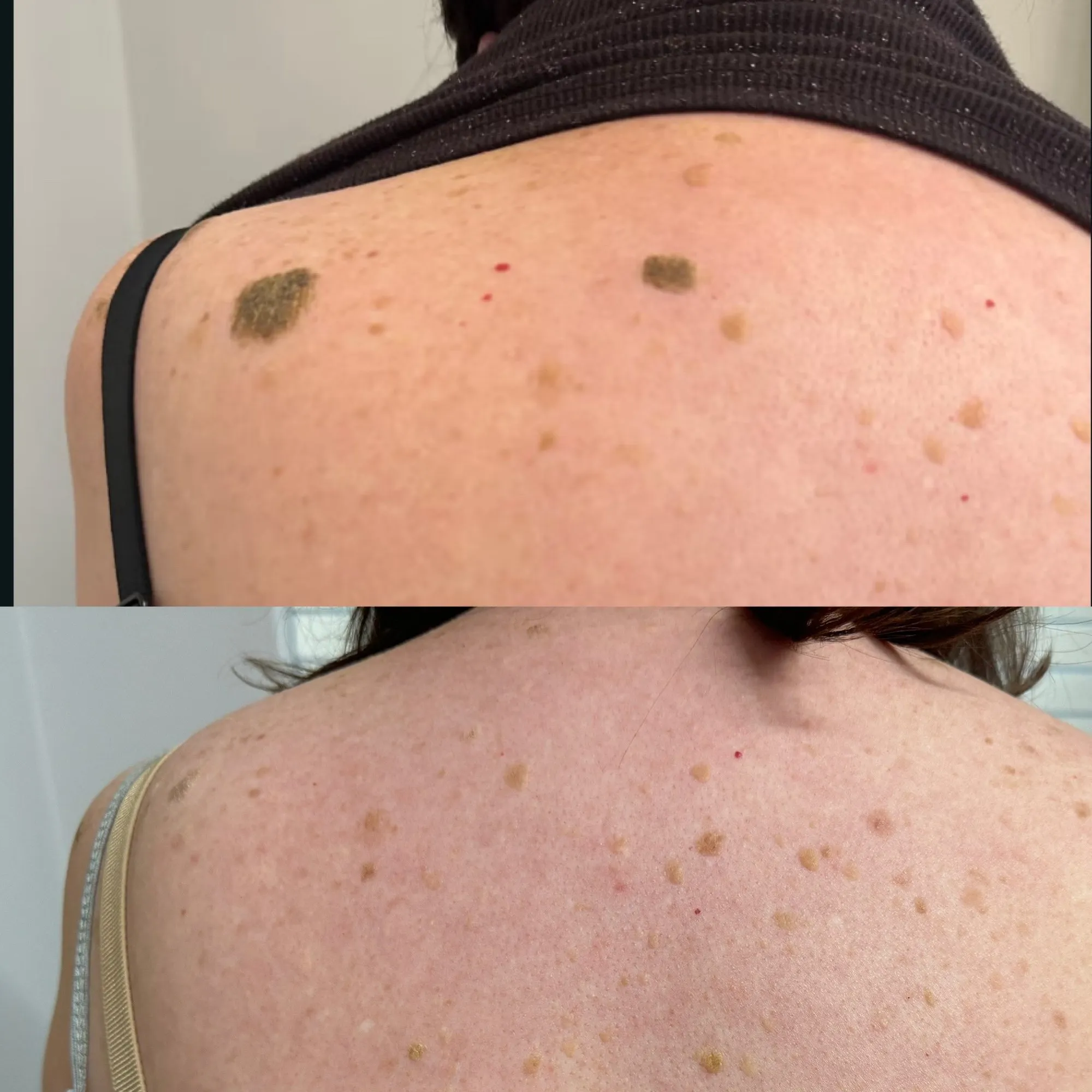
A lesion that has been fully removed does not usually return, though some benign lesions can recur if any tissue remains, and cryotherapy occasionally needs a second session. What removal does not do is stop new lesions forming elsewhere. Skin tags and seborrhoeic keratoses in particular tend to keep arriving with age, so removal treats the marks you have rather than the tendency to grow them.
How long does the report from a mole check take?
Reports are usually returned within 24 to 48 hours and generally under 72, and advise one of three things: reassurance, monitoring with specific guidance on what to watch for, or referral for further review. The images are read by a UK consultant dermatologist rather than an AI triage tool.

Start here if any of this applies to you

If a mole or a mark is changing quickly, bleeding, crusting, itching persistently, has become very dark or has gone ragged at the edges, or if you feel unwell alongside it, do not book with us. Go to your GP and say you are worried about a changing mole. The urgent NHS referral route exists for that presentation and it is faster and more thorough than anything a private clinic appointment can offer. Nothing on this page should slow that down by a day.

Most people asking about a mark are not in that position. They have something on their back they cannot see properly, a mark a partner mentioned, or a lesion that has started catching on a collar. That is who the rest of this page is for.

What an assessment can and cannot tell you

An assessment is worth more when its limits are stated, because reassurance with unstated limits is doing work it has not earned.

It is not a biopsy. Only laboratory examination of tissue confirms what a lesion is. What a dermoscopic report gives you is a consultant’s opinion on whether that step is warranted, which is the question most people arrive with. It cannot rule out skin cancer, and no photograph-based assessment can.

It is a snapshot. A report describes a lesion as it was on the day it was imaged. Anything that changes afterwards needs looking at again, whatever a previous report said.

It is not a whole-body survey. We image the marks you bring to the appointment. If your concern is your overall picture rather than one specific mark, say so when you book so the appointment can be planned properly. People with many atypical moles, or a personal or family history of skin cancer, belong under regular dermatological review rather than relying on occasional checks.

Why the instrument matters

A mole viewed by eye and the same mole viewed through a dermoscope are not the same picture, and the difference has been measured. In a randomised trial of clinicians working in primary care, adding a dermoscope raised sensitivity from 54.1% to 79.2%, while specificity moved only from 71.3% to 71.8%. A separate randomised trial of remote review in the same systematic review found that adding dermoscopic images to ordinary clinical photographs took sensitivity from 86.57% to 92.86% and specificity from 72.33% to 96.24% (Jones OT, Jurascheck LC, van Melle MA et al. BMJ Open 2019;9(8):e027529. PMID 31434767).

Sensitivity is the share of lesions warranting further attention that the examination correctly flags. Specificity is the share of harmless lesions correctly left alone. Both numbers matter here, because an unnecessary referral costs an appointment, a wait and a fortnight of worry.

A meta-analysis restricted to nine studies carried out in clinical settings rather than on photographs in a lecture theatre put the relative diagnostic odds ratio for dermoscopy against naked eye examination at 15.6, with a 95% confidence interval of 2.9 to 83.7 (Vestergaard ME, Macaskill P, Holt PE, Menzies SW. British Journal of Dermatology 2008;159(3):669-76. PMID 18616769). The interval is wide, which is honest reporting on nine studies rather than a weak result.

Once you know what it is

Removal is a separate conversation from assessment, and it happens second.

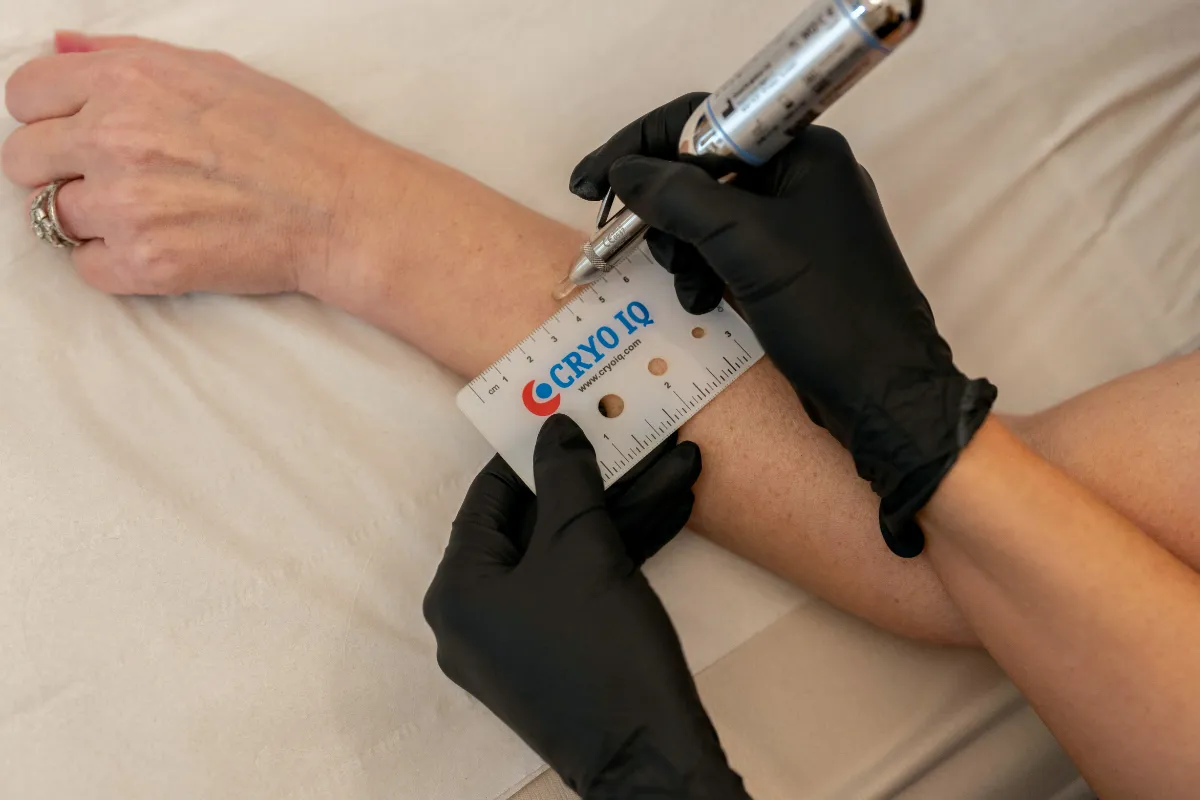
Cryotherapy suits selected surface lesions such as skin tags, warts, seborrhoeic keratoses and cherry angiomas. A controlled burst of cold freezes the tissue, which then dries and sheds over days to weeks. From £100 per lesion.

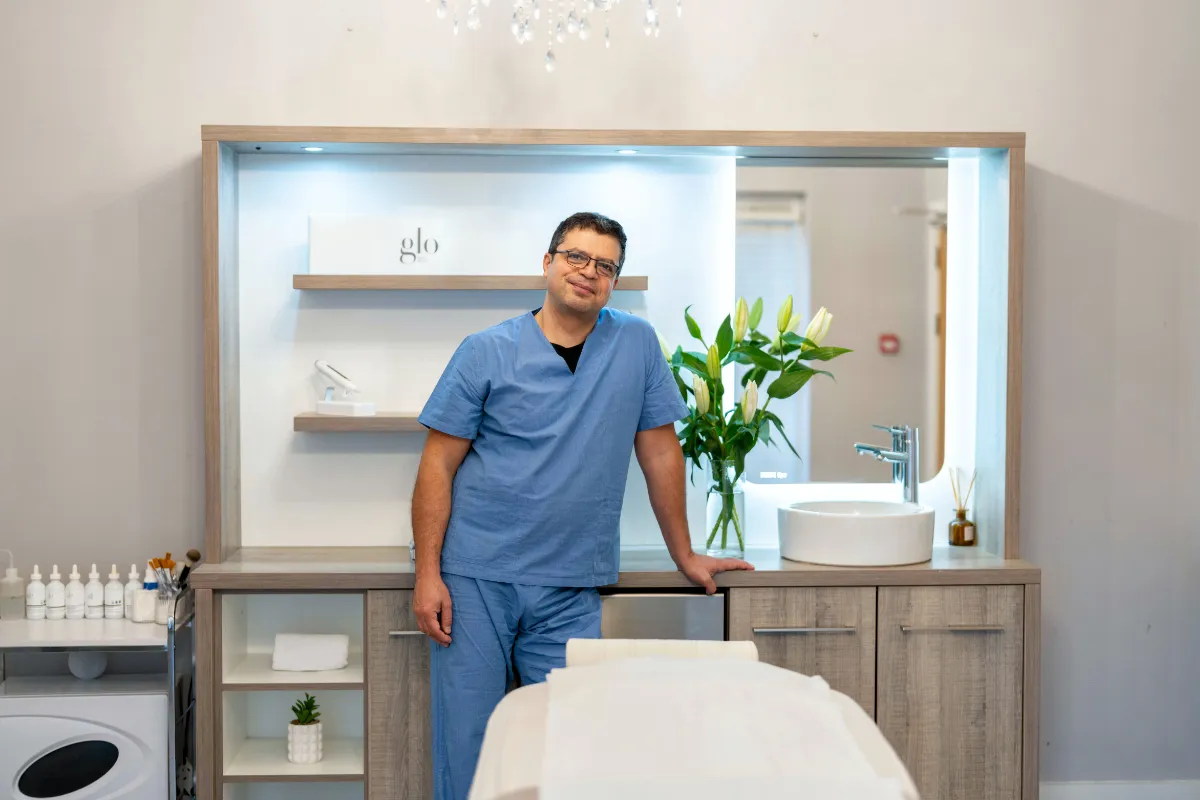
Doctor-led lesion removal covers what cryotherapy does not: raised growths, cysts and lesions better handled by shave removal, cautery or minor excision under local anaesthetic, carried out by Dr Shahe Boghossian. From £200 per lesion.

Mole and lesion imaging is the assessment step for a mark you want a specialist opinion on, from £50 per mole. The images are read through Map My Mole, run by Community Dermatology Limited, whose reports are handled by consultant dermatologists.

Read further

Ready to take the next step?

Book a consultation

Your clinician will assess your skin, review your history and design a treatment plan matched to your specific presentation, not a generic protocol.

Medically reviewed by Dr Shahe Boghossian, Medical Consultant, GMC 5204600. Last reviewed 14 Aug 2026.

Registered with & recognised by

Book a consultation WhatsApp